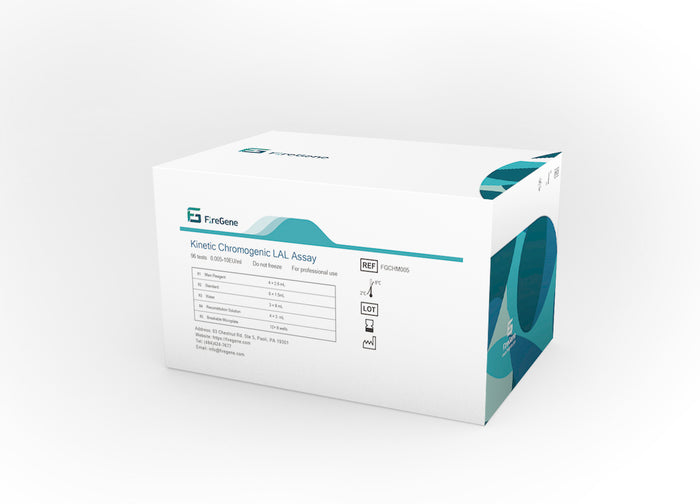
# Kinetic Chromogenic Endotoxin Test: A Rapid and Sensitive Method for Endotoxin Detection
## Introduction
Endotoxins, also known as lipopolysaccharides (LPS), are toxic components of the outer membrane of Gram-negative bacteria. Their presence in pharmaceuticals, medical devices, and other healthcare products can cause severe pyrogenic reactions in humans. Therefore, accurate and sensitive detection of endotoxins is crucial in quality control processes.
## What is the Kinetic Chromogenic Endotoxin Test?
The Kinetic Chromogenic Endotoxin Test is a modern, quantitative method for endotoxin detection that combines the principles of kinetic measurement with chromogenic substrate technology. This test offers significant advantages over traditional methods like the Limulus Amebocyte Lysate (LAL) gel-clot test.
### How It Works
The test utilizes a chromogenic substrate that reacts with enzymes activated during the endotoxin-mediated coagulation cascade in LAL. When endotoxins are present:
– They activate Factor C in the LAL reagent
– This triggers a series of enzymatic reactions
– The final step cleaves a synthetic chromogenic substrate
– The resulting color change is proportional to the endotoxin concentration
## Advantages of the Kinetic Chromogenic Method
This innovative approach offers several benefits:
– High sensitivity: Can detect endotoxin levels as low as 0.001 EU/mL
– Rapid results: Typically provides quantitative data within 15-60 minutes
– Wide dynamic range: Suitable for various sample types and concentrations
– Objective measurement: Uses spectrophotometric detection rather than subjective visual interpretation
– Automation-friendly: Easily adaptable to automated systems for high-throughput testing
## Applications in Various Industries
The Kinetic Chromogenic Endotoxin Test has become invaluable in multiple sectors:
### Pharmaceutical Industry
Used for quality control of:
– Injectable drugs
– Biologics
– Vaccines
– Medical devices
### Biomedical Research
Essential for:
– Studying inflammatory responses
– Evaluating drug safety
– Monitoring cell culture conditions
### Water Quality Testing
Applied in:
– Dialysis water monitoring
– Pharmaceutical water systems
– Medical device reprocessing
## Comparison with Other Endotoxin Detection Methods
Method | Sensitivity | Time Required | Quantification | Automation Potential
Gel-Clot | 0.03 EU/mL | 60+ min | Semi-quantitative | Low
Turbidimetric | 0.001 EU/mL | 15-60 min | Quantitative | High
Chromogenic | 0.001 EU/mL | 15-60 min | Quantitative | High
## Implementation Considerations
When adopting the Kinetic Chromogenic Endotoxin Test, several factors should be considered:
– Sample preparation requirements
– Interference testing needs
– Validation protocols
– Equipment requirements (spectrophotometer)
– Training for personnel
– Compliance with relevant pharmacopeial standards (USP, EP, JP)
Keyword: Kinetic Chromogenic Endotoxin Test
## Future Developments
Ongoing research aims to:
– Further improve sensitivity
– Reduce testing time
– Enhance automation capabilities
– Develop more stable reagents
– Expand applications to novel sample matrices
## Conclusion
The Kinetic Chromogenic Endotoxin Test represents a significant advancement in endotoxin detection technology. Its combination of speed, sensitivity, and quantitative accuracy makes it an indispensable tool for ensuring product safety in pharmaceutical manufacturing and biomedical applications. As technology continues to evolve, this method is likely to become even more widespread in quality control laboratories worldwide.